Recommended Age Groups: Preschool through Elementary
No special precautions, but glass jars can break if dropped.
Ask the following questions and share ideas:
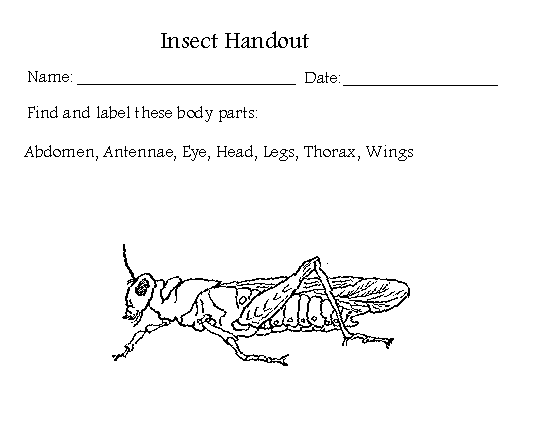
Today, we are going to carefully study and observe a grasshopper. We will look at its body to identify the main physical characteristics or traits of an insect.
Have each person or pair
Ask again these guiding questions:
We should see on the handout and hear during discussion that insects have the following body parts and characteristics:
Note: If you have a female grasshopper, you will see a long, pointed segment at the end of her abdomen. She uses this body part to deposit her eggs in soft ground. If you have a male grasshopper, the end segment will be rounded.
Catch other insects and put in a jar to study. See if they have the same basic five physical characteristics. You might look for lady bugs, moths, mosquitoes, house flies, beetles, praying mantises, dragonflies, ants3, etc. If children have ever had to deal with head lice, they would be very interested in seeing an image of a louse!
Many insects are helpful to people. Pick a helpful insect to study about. Examples may include: bees that make honey, silk worm moths that spin silk, bees and butterflies that pollinate flowers, mantises and lady beetles that eat harmful insects. Draw pictures, write reports, or make posters about these helpful insects.
Some insects are a nuisance or even cause harm to people. Pick a harmful insect to study. Examples may include: grasshoppers or locusts that eat crops; gypsy or leopard moths that kill leaves on trees; termites that eat wood on houses and other buildings; mosquitoes that carry disease-producing germs; fleas, lice, wasps, and gnats that sting and bite people and cause mild to life-threatening dangers for people. Draw pictures, write reports, or make posters about these harmful insects.
Research the emerald ash borer that began killing the ash trees in our neighnorhoods in southeastern Michigan in summer 2002! Here are some more links about invasive species for your research.
Cicadas are a fascinating species that can spend as long as 17 years in the ground before emerging! Learn more about Michigan species, including what they sound like, at Cicadas of Michigan.
People have been struggling with how to control and kill harmful insects for years. You may be interested in learning more about chemicals that are used to kill insects. See how insects adapt so they can live in spite of our sprays and dusts. Investigate how some pesticides have had very harmful effects on other forms of life like plants, trees, and fish in water treated to kill off certain insects. Older students may wish to research the genetic modification of food crops to make them resistant to pests.
Learn about the pesticides used on fruit trees and other plants that we eat. How harmful are these chemicals to people? Does rinsing fruit and vegetables with plain water remove the pesticides and make them safe for us to eat?
Learn more about organic gardening. Talk with someone who raises vegetables organically. What is involved? What are the problems with organically raised food? Are these foods safe to eat? Why do they typically cost more that non-organic foods?
Visit other insect-related Web sites, such as the Orkin Insect Zoo, Pest World for Kids, Monarch Watch, and the University of Michigan Zoology Museum’s Insect division.
| Let us know what you think! E-mail our webmaster |
Are you happy with your life?Michigan Reach Out! has distilled our best mentor training into a book, Passport 2 Purpose. Let us help you answer the important questions determining whether you will enjoy your life's journey! | |
| To Lessons by Subject or Age Group | ||
| To Alphabetical Listing | ||
| To Michigan Reach Out! Home |